

I caught this review of another movie (and book by the same name) that's not likely to be in Triangle theaters but might be worth watching:
I.O.U.S.A.
"For 85 minutes, I.O.U.S.A. zips through 200 years of American history to explain how the richest country in the world is currently $9.5 trillion in debt.
"The federal debt seems too incredible a sum to even fully grasp; an easier way to understand such an enormous figure is that if the debt was equally divided among the country's population, each American would owe over $30,000.
"A deficit is nothing new for the United States. The federal government has almost always spent more than it earned in taxes. The film's tour through history actually makes the current debt slightly less distressing; in 1946 World War II spending contributed to the national debt peaking at 120% of the country's Gross Domestic Product (GDP). Politicians, regardless of political affiliation, don't want to make the tough decision of cutting spending and raising taxes, especially when it means not being reelected. But (the director) Creadon argues -- without actually being partisan -- that the only way to decrease the national debt is to enact a more responsible fiscal policy that does just that.
"A significant portion of I.O.U.S.A. follows former U.S. Comptroller General David Walker and The Concord Coalition Executive Director Robert Bixby as they tour the country speaking in town hall meetings as part of their Fiscal Wake-Up Tour. Since 2005, Walker and Bixby have made it their mission to educate the public on the reality that the future of the country depends on making difficult financial decisions.
"According to Bixby, the current budget -- with over $700 billion annually allocated for military spending and a yearly budget deficit of over $230 billion -- is "unsustainable" over the long term; future generations are going to inherit an enormous debt while simultaneously shouldering the rising costs of Social Security and Medicare as the country ages. The Iraq war alone is costing approximately $275 million a day.
"Between 1980 and 1990 the national debt more than tripled. After being elected in 1992, President Bill Clinton broke his campaign promise to lower taxes, deciding instead to balance the budget and eliminate the debt by 2012. But we haven't continued to pay down our debt; the rising budget deficit, and what that means for the country's future, is why Walker and Bixby started their Fiscal Wake-Up Tour.
"Aside from voting for more responsible politicians, there is little the average American can do about the budget deficit. But there is something we can all do about an equally serious economic problem: the trade deficit, specifically the amount of Chinese-made goods Americans buy. Warren Buffet famously wrote about the problem in his 2003 Forbes magazine article titled "Squanderville versus Thriftville". During an on-screen interview, Buffet says that he is more concerned with the trade deficit than the budget deficit.
"While true trade between countries is good, the film asserts that the United States is too reliant on foreign countries to produce necessary goods. This situation has created low cost goods and services for American consumers, while destroying the county's manufacturing industry. Workers at a Chinese light bulb factory featured in the film only make $10 a day. So instead of Americans being able to make their own light bulbs at domestic factories that pay a living wage, they buy cheaper light bulbs from China without really considering the long-term financial and ethical ramifications.
"Americans need to start thinking about the consequences of buying foreign goods that could be easily produced in their own country -- even if that means accepting a slightly higher price tag. The current economic relationship is contributing to China's growing prowess and the United States' growing trade deficit.
"To its credit, I.O.U.S.A. does not take political sides; regardless of which party is in office -- politicians on both sides of the aisle are responsible for the current situation -- the United States needs a balanced budget and more equitable international trade relationships.
"For those who think that this sobering issue exists solely at a federal level, the film points out that individual Americans have the same negative savings rate as the country. It's individuals who are buying all of those cheap tchotchkes from China, therefore contributing to the country's trade deficit.
"While it may be easier to simply ignore the complexities of the country's finances, Americans actually have a chance to reevaluate their fiscal policies with the upcoming presidential elections..."
Wednesday, September 10, 2008
The State of The Economy in I.O.U.S.A.

Tuesday, September 9, 2008
That's Religulous!
Bill Maher and Larry Charles (Seinfeld, Curb Your Enthusiasm) have come together to make a documentary on the current state of religion in our world. It's due to be released (a limited release, I assure you - the Bible Belt won't run it) in October. Add it to your Netflix Saved Queue now!
Religion, The Fairy Tale
"It's just the Ultimate Hustle. It's just 'pay no attention to the man behind the curtain'...
Why can't God just defeat the Devil and get rid of evil? and it's the same reason the comic book character can't get rid of his nemesis - then there's no story. If God gets rid of the Devil, and he could - he's all-powerful, well then, there's no fear, there's no reason to come to church, there's no reason to pass the plate, we're all out of a job, it's got to go on."
Bill Maher on Larry King
After this, Maher created the website Disbeliefnet.com
Monday, September 8, 2008
The Four Noble Truths

The greatest achievement is selflessness.
The greatest worth is self-mastery.
The greatest quality is seeking to serve others.
The greatest precept is continual awareness.
The greatest medicine is the emptiness of everything.
The greatest action is not conforming with the worlds ways.
The greatest magic is transmuting the passions.
The greatest generosity is non-attachment.
The greatest goodness is a peaceful mind.
The greatest patience is humility.
The greatest effort is not concerned with results.
The greatest meditation is a mind that lets go.
The greatest wisdom is seeing through appearances.
The Four Noble Truths
1. The world is full of suffering and stress.
2. The cause of this suffering and stress is desires of physical instincts.
3. If desire can be removed, then suffering and stress will be ended.
4. Desire can be removed by following the Eightfold Path:
Right Views,
Right Thoughts,
Right Speech,
Right Conduct,
Right Livelihood,
Right Effort,
Right Mindfulness,
Right Concentration.
.
Friday, September 5, 2008
Democratic Ecology Products
FROM TILL TO ROOFTOP Philippe Starck, who designed the 2 euro coin is now at work on a line of relatively inexpensive energy-saving Democratic Ecology products.


ENERGIZED Philippe Starck’s new product is a wind turbine.


Plastic stacking Louis XV chairs.

ROCKET MAN Philippe Starck is designing “harmonious” Virgin Galactic spacewear.
Incredible designer - I fell in love with his juicer decades ago and am incredibly excited that he's now working toward making affordable power generators - and of course his wind turbine will look fantastic on your roof!
NY Times article:
"THERE’S no point in arguing with Philippe Starck, because it generally goes like this: (1) The world’s most famous product designer makes a well-meaning and sincere but slightly preposterous claim. (2) You feel obliged to question the preposterous bit. (3) He comes across all hurt and boyish. (4) You feel mean.
Take Mr. Starck’s claim to have “invented a concept called Democratic Design,” which he says gives everyone high-quality products at affordable prices. Sounds great, but didn’t the modern movement try to do that for most of the 20th century? And how can he claim to have “won the battle” by designing “a chair that sells for less than 100 euros,” or $156, when that’s still too expensive for most Western consumers? And what about the 90 percent of the world’s population too poor to afford many of the products most Americans see as essentials? What has Democratic Design done for them?
“Oh please, I’m not God,” pleads Mr. Starck. “I’m just a designer, and I’m doing my best.”
Luckily for the 90 percent, other designers are trying to help them, as illustrated by the recent Cooper-Hewitt show “Design for the Other 90 Percent.” Mr. Starck, meanwhile, is battling on another front: developing relatively cheap, attractive, energy-saving products to “introduce everybody to ecology.”
The first of his so-called Democratic Ecology products, a line he is developing in collaboration with Pramac, an Italian industrial group, is to be introduced in Europe this fall, and in the United States early next year. It is a miniature rooftop wind turbine, priced between $780 and $1,250, which Mr. Starck said can produce up to 80 percent of a home’s energy.
“Imagine a Saturday afternoon, and a guy going stupidly to the supermarket to buy a useless gadget,” Mr. Starck said. “He sees a really sexy object. ‘Oh my God, it’s beautiful. How much does it cost? Five hundred euros? That’s almost what I’d spend on a useless gadget.’ He brings the windmill home, goes to his roof, and 15 minutes later he sees it turning and producing energy. Wow!”
Mr. Starck’s turbine is one of dozens of alternative energy sources that have come onto the market recently, but there are sound reasons for taking his product seriously. One is that it’s deftly designed, not least because the blades are made of transparent plastic, and are virtually invisible on the roof. Another is that it’s designed by him, and Mr. Starck has been so successful at persuading people to buy visually seductive but slightly silly objects — plastic Louis XV chairs, lamps with gun-shaped bases, garden gnome stools and so on — that he may well be able to do the same for something that is actually useful.
That said, it’s been a long time since the design world felt that it had to take Mr. Starck seriously. He’s a gentle giant who bears a resemblance to Fred Flintstone. Now 59, he rose to fame in his native France during the 1980s, when his flair for reinventing everyday objects by casting them as something else — a citrus juicer as a crustacean, plastic stacking chairs as antique ones — was hailed as a playful and very commercial take on postmodernism.
Mr. Starck has since sold hundreds of thousands of those juicers, and nearly a million Louis Ghost chairs, according to their respective manufacturers, Alessi and Kartell. For better or worse, he has also created the designer hotel, aided and abetted by the New York hotelier Ian Schrager, and the showstopping restrooms that now appear in every other would-be cool bar. Mr. Starck has cast himself as a media star by spouting his design philosophy in Franglais sound bites, and bragging about being able to design a chair in the time it took for an aircraft seatbelt sign to go on and off. No other designer could beat him for brio and bankability, but by the mid-1990s he was grouching about being bored by design.
Commercially, he’s still a colossus, bagging plum jobs like the creative directorship of Richard Branson’s Virgin Galactic space venture, which he took on in 2005, and seizing the media spotlight (most recently with a reality TV show he is shooting for the BBC). But at times he seems like design’s equivalent of a dinosaur rocker. Mr. Starck’s confession this March, to the German weekly Die Zeit, that he was “ashamed” that “everything I designed is unnecessary” drew derisory roars in the blogosphere.
Does he still feel that way? “I regret that my job is design,” he said. “Design stupidly produces more things, and for years I’ve spoken about the importance of living with fewer things. But my position is a little ambiguous.”
Indeed it is. To his credit, Mr. Starck was advocating environmentalism long before it became fashionable, but he hasn’t embraced it fully in his work. Nor does he seem to see the incongruity in rattling off a list of eco-responsible activities — his organic diet, the solar-powered oyster farm he owns in Arcachon Bay in southwestern France, and so forth — ending with “the least polluting plane on the market,” his private jet. But now he’s hoping to redress the balance with Democratic Ecology.
The windmill is an encouraging start. Made from the same transparent plastic as his Louis Ghost chairs, they and the other Democratic Ecology products are to be manufactured by Pramac. The timing is propitious, with oil prices way up and everyone from General Electric to the veteran oilman T. Boone Pickens investing in alternative energy. Increasing numbers of homes have metal wind turbines on their roofs, so why not transparent plastic ones?
Next up from Democratic Ecology is a solar panel, a film that covers existing windows. Mr. Starck is also designing a prefabricated green house for the line, with glass walls that can be changed from clear to opaque at the push of a button. The prototype is now being built for him and his family on the site of their old home outside Paris.
An electric car is under development, too, and an eco-moped. Mr. Starck has nearly finished work on a solar- and hydrogen-powered boat, the first of which is to be delivered to the Hotel Bauer, its future owner, in Venice next spring.
“We’re seizing every opportunity to create affordable, high-technology ecology products,” he said. “It’s very, very important that they’re beautiful, because ecology should be a pleasure, not a punishment. One of the most beautiful boats in the world is the Venetian taxi, and our boat will be even more beautiful.”
Tuesday, August 26, 2008
A Spiritual Harvest
Caption Reads:
Young Christian missionaries visit the Olympic green outside the National stadium, also known as "Bird's nest" in Beijing , China, Wednesday, Aug.20, 2008. Nevermind China's ban on foreign missionaries. As the Olympics end, Christian groups are calling their quiet evangelizing throughout the country during the games a success.Attracted by the image of 1.3 billion people ruled by ahteist, the groups prepared for years for what the Southern Baptists once called "a spiritual harvest unlike any other".

Sunday, August 24, 2008
Prediction Specialist: The Future Is Now? Pretty Soon, at Least

Do you have trouble sticking to a diet? Have patience. Within 10 years, Dr. Kurzweil explained, there will be a drug that lets you eat whatever you want without gaining weight.
Worried about greenhouse gas emissions? Have faith. Solar power may look terribly uneconomical at the moment, but with the exponential progress being made in nanoengineering, Dr. Kurzweil calculates that it’ll be cost-competitive with fossil fuels in just five years, and that within 20 years all our energy will come from clean sources.
Are you depressed by the prospect of dying? Well, if you can hang on another 15 years, your life expectancy will keep rising every year faster than you’re aging. And then, before the century is even half over, you can be around for the Singularity, that revolutionary transition when humans and/or machines start evolving into immortal beings with ever-improving software.
At least that’s Dr. Kurzweil’s calculation. It may sound too good to be true, but even his critics acknowledge he’s not your ordinary sci-fi fantasist. He is a futurist with a track record and enough credibility for the National Academy of Engineering to publish his sunny forecast for solar energy.
He makes his predictions using what he calls the Law of Accelerating Returns, a concept he illustrated at the festival with a history of his own inventions for the blind. In 1976, when he pioneered a device that could scan books and read them aloud, it was the size of a washing machine.
Two decades ago he predicted that “early in the 21st century” blind people would be able to read anything anywhere using a handheld device. In 2002 he narrowed the arrival date to 2008. On Thursday night at the festival, he pulled out a new gadget the size of a cellphone, and when he pointed it at the brochure for the science festival, it had no trouble reading the text aloud.
This invention, Dr. Kurzweil said, was no harder to anticipate than some of the predictions he made in the late 1980s, like the explosive growth of the Internet in the 1990s and a computer chess champion by 1998. (He was off by a year — Deep Blue’s chess victory came in 1997.)
“Certain aspects of technology follow amazingly predictable trajectories,” he said, and showed a graph of computing power starting with the first electromechanical machines more than a century ago. At first the machines’ power doubled every three years; then in midcentury the doubling came every two years (the rate that inspired Moore’s Law); now it takes only about a year.
Dr. Kurzweil has other graphs showing a century of exponential growth in the number of patents issued, the spread of telephones, the money spent on education. One graph of technological changes goes back millions of years, starting with stone tools and accelerating through the development of agriculture, writing, the Industrial Revolution and computers. (For details, see nytimes.com/tierneylab.)
Now, he sees biology, medicine, energy and other fields being revolutionized by information technology. His graphs already show the beginning of exponential progress in nanotechnology, in the ease of gene sequencing, in the resolution of brain scans. With these new tools, he says, by the 2020s we’ll be adding computers to our brains and building machines as smart as ourselves.
This serene confidence is not shared by neuroscientists like Vilayanur S. Ramachandran, who discussed future brains with Dr. Kurzweil at the festival. It might be possible to create a thinking, empathetic machine, Dr. Ramachandran said, but it might prove too difficult to reverse-engineer the brain’s circuitry because it evolved so haphazardly.
“My colleague Francis Crick used to say that God is a hacker, not an engineer,” Dr. Ramachandran said. “You can do reverse engineering, but you can’t do reverse hacking.”
Dr. Kurzweil’s predictions come under intense scrutiny in the engineering magazine IEEE Spectrum, which devotes its current issue to the Singularity. Some of the experts writing in the issue endorse Dr. Kurzweil’s belief that conscious, intelligent beings can be created, but most think it will take more than a few decades.
He is accustomed to this sort of pessimism and readily acknowledges how complicated the brain is. But if experts in neurology and artificial intelligence (or solar energy or medicine) don’t buy his optimistic predictions, he says, that’s because exponential upward curves are so deceptively gradual at first.
“Scientists imagine they’ll keep working at the present pace,” he told me after his speech. “They make linear extrapolations from the past. When it took years to sequence the first 1 percent of the human genome, they worried they’d never finish, but they were right on schedule for an exponential curve. If you reach 1 percent and keep doubling your growth every year, you’ll hit 100 percent in just seven years.”
Dr. Kurzweil is so confident in these curves that he has made a $10,000 bet with Mitch Kapor, the creator of Lotus software. By 2029, Dr. Kurzweil wagers, a computer will pass the Turing Test by carrying on a conversation that is indistinguishable from a human’s.
I’m not as confident those graphs are going to hold up for fields besides computer science, so I’d be leery of betting on a date. But if I had to take sides in the 2029 wager, I’d put my money on Dr. Kurzweil. He could be right once again about a revolution coming sooner than expected. And I’d hate to bet against the chance to be around for this one.
Wednesday, August 13, 2008
Vertical Horizons in Agronomy
NYTimes article on new ideas when architecture meets farming.
Could be the answer to shipping costs for our produce, meat and dairy needs.
Seems like 'local' takes on a whole new meaning and erecting a farm alongside any other highrise seems just crazy enough to work.

Monday, July 14, 2008
An Ideal Husband
This weekend, we celebrate our great American pastime: messy celebrity divorces.
There’s the Christie Brinkley/Peter Cook fireworks on Long Island and the Madonna/Guy Ritchie/A-Rod Roman candle in New York.
So how do you avoid a relationship where you end up saying, “The man who I was living with, I just didn’t know who he was” — as Brinkley did in court when talking about her husband’s $3,000-a-month Internet porn and swinger site habit? (Not to mention the 18-year-old mistress/assistant.)
Father Pat Connor, a 79-year-old Catholic priest born in Australia and based in Bordentown, N.J., has spent his celibate life — including nine years as a missionary in India — mulling connubial bliss. His decades of marriage counseling led him to distill some “mostly common sense” advice about how to dodge mates who would maul your happiness.
“Hollywood says you can be deeply in love with someone and then your marriage will work,” the twinkly eyed, white-haired priest says. “But you can be deeply in love with someone to whom you cannot be successfully married.”
For 40 years, he has been giving a lecture — “Whom Not to Marry” — to high school seniors, mostly girls because they’re more interested.
“It’s important to do it before they fall seriously in love, because then it will be too late,” he explains. “Infatuation trumps judgment.”
I asked him to summarize his talk:
“Never marry a man who has no friends,” he starts. “This usually means that he will be incapable of the intimacy that marriage demands. I am always amazed at the number of men I have counseled who have no friends. Since, as the Hebrew Scriptures say, ‘Iron shapes iron and friend shapes friend,’ what are his friends like? What do your friends and family members think of him? Sometimes, your friends can’t render an impartial judgment because they are envious that you are beating them in the race to the altar. Envy beclouds judgment.
“Does he use money responsibly? Is he stingy? Most marriages that founder do so because of money — she’s thrifty, he’s on his 10th credit card.
“Steer clear of someone whose life you can run, who never makes demands counter to yours. It’s good to have a doormat in the home, but not if it’s your husband.
“Is he overly attached to his mother and her mythical apron strings? When he wants to make a decision, say, about where you should go on your honeymoon, he doesn’t consult you, he consults his mother. (I’ve known cases where the mother accompanies the couple on their honeymoon!)
“Does he have a sense of humor? That covers a multitude of sins. My mother was once asked how she managed to live harmoniously with three men — my father, brother and me. Her answer, delivered with awesome arrogance, was: ‘You simply operate on the assumption that no man matures after the age of 11.’ My father fell about laughing.
“A therapist friend insists that ‘more marriages are killed by silence than by violence.’ The strong, silent type can be charming but ultimately destructive. That world-class misogynist, Paul of Tarsus, got it right when he said, ‘In all your dealings with one another, speak the truth to one another in love that you may grow up.’
“Don’t marry a problem character thinking you will change him. He’s a heavy drinker, or some other kind of addict, but if he marries a good woman, he’ll settle down. People are the same after marriage as before, only more so.
“Take a good, unsentimental look at his family — you’ll learn a lot about him and his attitude towards women. Kay made a monstrous mistake marrying Michael Corleone! Is there a history of divorce in the family? An atmosphere of racism, sexism or prejudice in his home? Are his goals and deepest beliefs worthy and similar to yours? I remember counseling a pious Catholic woman that it might not be prudent to marry a pious Muslim, whose attitude about women was very different. Love trumped prudence; the annulment process was instigated by her six months later.
“Imagine a religious fundamentalist married to an agnostic. One would have to pray that the fundamentalist doesn’t open the Bible and hit the page in which Abraham is willing to obey God and slit his son’s throat.
“Finally: Does he possess those character traits that add up to a good human being — the willingness to forgive, praise, be courteous? Or is he inclined to be a fibber, to fits of rage, to be a control freak, to be envious of you, to be secretive?
“After I regale a group with this talk, the despairing cry goes up: ‘But you’ve eliminated everyone!’ Life is unfair.”
Thursday, July 10, 2008
Lovely Poem by Ch'an Master Hsu Yun

Heart Of The Buddha - A Poem by Hsu Yun
 No need to chase back and forth like the waves. No need to chase back and forth like the waves.The same water which ebbs is the same water that flows. No point turning back to get water When it's flowing around you in all directions The heart of the Buddha and the people of the world... Where is there any difference? |
An Exquisite Truth by Hsu Yun
This is an exquisite truth:Saints and ordinary folks are the same from the start.
Inquiring about a difference
Is like asking to borrow string when you've got a good strong rope.
Every Dharma is known in the heart.
After a rain, the mountain colors intensify.
Once you become familiar with the design of fate's illusions
Your ink-well will contain all of life and death.
Searching For The Dharma - by Hsu Yun
 You've traveled up ten thousand steps in search of the Dharma. You've traveled up ten thousand steps in search of the Dharma.So many long days in the archives, copying, copying. The gravity of the Tang and the profundity of the Sung make heavy baggage. Here! I've picked you a bunch of wildflowers. Their meaning is the same but they're much easier to carry. |
I enjoyed the poems and photos of this 19th Century Monk
Found this when I searched the site
Wednesday, May 21, 2008
Presidential Predictions
Well, looks like my Libertarian vote will be useless again, but you know me...
Clinton Obama Nomination Update - Written May 8th 2008
Michelle Whitedove

First I'd like to clarify why 100% accuracy is not possible when looking into the future. I'm not an all knowing oracle. Only God knows the true outcome and I am his humble messenger. When I look into the future, it's much like an onion. Time is circular with many layers past, present, future, and many possible futures. Our future is dependent upon mankind's free will. We each create our personal future based on our actions, thoughts, and our intent. Collectively as a mass consciousness we create the future for the USA and our World. Nothing is written in stone, the future is always in flux and shifting. There are always three possible futures. As a visionary and futurist, I try to predict the MOST PROBABLE future.
With that said, I'm NOT changing my prediction.
-I still see Hillary Clinton as President. My vision remains unchanged.
-It will be a close race for Hillary to win the nomination with recounts of delegates, super delegates and mega delegates.
-I see a 'Major' scandal coming for Obama that will greatly tarnish his reputation. Obama has many dirty secrets.
-The Washington insiders do not want Obama as President because they know that he will be ineffective. Whereas Hillary knows how get the wheels in motion and move forward to get her goals accomplished.
OTHER FUTURES:
I have also seen images of other possible futures too. I've seen Obama being elected and being assassinated within his first three months of presidency. With Hillary as his VP, this too would make her the President
THIS I KNOW FOR SURE:
I know without a shadow of doubt that Hillary will be America's first Woman President. Some way, somehow, she will be President, I know that 100%! If not this election because of man's free will, then the next election. Hillary wrote in her contract with God to be a world leader and make difference for humanity and she will accomplish the task to the best of her ability. You see, before we come to Earth we make a contract, and agreement to complete certain tasks and/or lessons during this lifetime. Hillary will complete her mission.
Tuesday, May 20, 2008
A Spiritual Partnership
Making Their Own Limits in a Spiritual Partnership

Michael Roach and Christie McNally vowed to be both celibate and never apart by more than 15 feet or so.
TEN years ago, Michael Roach and Christie McNally, Buddhist teachers with a growing following in the United States and abroad, took vows never to separate, night or day.
By “never part,” they did not mean only their hearts or spirits. They meant their bodies as well. And they gave themselves a range of about 15 feet.
If they cannot be seated near each other on a plane, they do not get on. When she uses an airport restroom, he stands outside the door. And when they are here at home in their yurt in the Arizona desert, which has neither running water nor electricity, and he is inspired by an idea in the middle of the night, she rises from their bed and follows him to their office 100 yards down the road, so he can work.
Their partnership, they say, is celibate. It is, as they describe it, a high level of Buddhist practice that involves confronting their own imperfections and thereby learning to better serve the world.
“It forces you to deal with your own emotions so you can’t say, ‘I’ll take a break,’ ” said Mr. Roach, 55, who trained in the same Tibetan Buddhist tradition as the Dalai Lama. After becoming a monk in 1983, he trained on-and-off in a Buddhist monastery for 20 years, and is one of a handful of Westerners who has earned the title of geshe, the rough equivalent of a religious doctorate. “You are in each other’s faces 24 hours a day,” he said. “You must deal with your anger or your jealousy.”
Ms. McNally said, “From a Buddhist perspective, it purifies your own mind.” Ms. McNally is 35 and uses the title of Lama, or teacher, an honor not traditionally bestowed on women by the Tibetan orders.
Their exacting commitment to this ideal of spiritual partnership has been an inspiration to many. In China and Israel, and in the United States, where they are often surrounded by devotees, their lectures on how laypeople can build spiritual partnerships are often packed with people seeking mates or ways to deepen their marriages. They hope their recently published book, “The Eastern Path to Heaven,” will appeal to Christians and broaden their American audience.
But their practice — which even they admit is radical by the standards of the religious community whose ideas they aim to further — has sent shock waves through the Tibetan Buddhist community as far as the Dalai Lama himself, whose office indicated its disapproval of the living arrangement by rebuffing Mr. Roach’s attempt to teach at Dharamsala, India, in 2006. (In a letter, the office said his “unconventional behavior does not accord with His Holiness’s teachings and practices.”)
“There is a tremendous amount of opprobrium by the Tibetan monks; they think they have gone wacky,” said Robert Thurman, a professor of Indo-Tibetan Buddhism at Columbia University.
Professor Thurman, a former monk himself, describes himself as a friend and admirer of Mr. Roach, and said that after the geshe made his relationship with Ms. McNally public in 2003, he begged him to renounce his monastic vows and to stop wearing the robes that mark him as a member of a monastic order. Mr. Roach declined, and the two have not spoken since.
“He is doing this partnership thing and insisting on being a monk,” Professor Thurman said. “It is superhuman. He says he is staying celibate, but people find it hard to believe.”
The yurt in which Mr. Roach and Ms. McNally live when they are not traveling the world (which is often about half the year) sits in the high desert some 100 miles east of Tucson, on a platform overlooking a rift in the cactus-speckled hills. For 100 acres around, the land is the property of Diamond Mountain University, an unaccredited school that Mr. Roach founded with Ms. McNally in 2004 to teach Buddhist principles and translation skills.
Although devoid of modern conveniences, the yurt they live in, which is 22 feet in diameter, feels almost luxurious compared with the spare, desiccated landscape around it. On one side of the tent is their double bed, and beside it a commode elegantly disguised as a wood side table. The floor is covered with carpets. A few carved wooden chests hold clothes and pillows.
Light streams in from a hole at the center of the tent’s roof, illuminating its poles, which were imported from Mongolia. The closeness to nature means that the indoor temperature is essentially the ambient one — beyond baking in the summer and freezing in the winter. (Their one attempt to battle the elements is a wood-burning stove.)
The couple did a three-year silent retreat in this yurt from 2000 to 2003, while their relationship was a secret to all but the few people who brought them food. Soon afterward, Mr. Roach determined it should be public, even if it flew in the face of two millenniums of Tibetan Buddhist tradition.
Spiritual Partners Interactive
cut and paste?
javascript:pop_me_up2('http://www.nytimes.com/interactive/2008/05/14/garden/20080515_BUDDHIST_FEATURE.html', '680_583', 'width=680,height=583,location=no,scrollbars=yes,toolbars=no,resizable=yes')


He acted for two reasons, he said. One, he felt that it was impossible to keep secrets in this age of Google Earth. Two, he decided that if Buddhism was really going to succeed in America, it would have to be more inclusive of women.
“If these ideas that will help people are going to make it in the West,” Ms. McNally said, “it can’t be a male-dominated culture, because people are not going to accept that.”
Ms. McNally’s path from student to co-teacher and constant partner has been a hard one, they both say. When she met Mr. Roach in 1996, two years out of New York University, where she majored in literature, he was a learned Buddhist. Two decades her senior, he was a Princeton graduate who in his years studying for the geshe degree also built a personal fortune by helping to grow Andin International, a designer, manufacturer and distributor of fine jewelry, from a start-up to a $100 million-a-year business.
She went to a seminar he was teaching in New York, where he lived at the time. She was just back from India, where she had studied meditation. It was not long before they fell in love, although they do not describe it that way. They say they began to see each other as angels.
In front of others, she was his acolyte. Otherwise, she was studying the principles of karma and emptiness so that she could eventually teach with him. In private, however, she said, they lived together and he bent over backward to listen to her and to defer to her wisdom.
Over time the two grew toward each other, according to friends — he even visibly. He let his hair grow long like hers and became taut and lean in a way he was not before.
But Anne Lindsey, a teacher at Diamond Mountain who now goes by the Buddhist nun’s name Chukyi and has known the couple almost from the start (she was one of those who brought them their food), said Ms. McNally had changed even more. “She has totally transformed,” she said. “For him it was a difference in appearance. For her, she was giggly, she was shy. She never talked. She only focused on Geshe Michael. Now she is this powerhouse of a teacher.”
There have been serious sacrifices, of course. When she agreed to join his life, two years before the spiritual partner vows, she accepted the rigors of his training, including, at the tender age of 24, celibacy. (He had been celibate, he says, since age 22 when he became a candidate for monkhood.) Even though she now considers sexual touching a “low practice,” she said, she still clearly remembers the July day when she gave it up.
But if they have renounced sex, they have replaced it with a level of communion that few other people could understand, much less tolerate.
They eat the same foods from the same plate and often read the same book, waiting until one or the other finishes the page before continuing. Both, they say, are practices of learning to submit one’s will to that of another.
They also do yoga together, breath for breath. “We are always inhaling at the same moment and we are always exhaling at the same moment,” Ms. McNally said. “It is very intimate, but it is not the kind of intimacy people are used to.”
The couple also admit to a hands-on physical relationship that they describe as intense but chaste. Mr. Roach compares it to the relationship his mother had with her doctor when she was dying of breast cancer. “The surgeon lay his hand on her breast, but there wasn’t any carnal thought in his mind,” he said. “He was doing some life-or-death thing. For us it is the same.”
This insistence that they share both purity and intimacy drives traditionalists to distraction. Buddhism has many different branches, most of which allow partners, spiritual or otherwise, in some form — but not for monks. Experts say the lineage of Mr. Roach’s branch of Buddhism clearly demands that you renounce monastic vows to have a partner. And many teachers have done just that.
There are very rare instances in the Indo-Buddhist tradition of an individual’s being considered holy enough for a chaste spiritual partnership, said Lama Surya Das, an American Buddhist who studied in Tibet and wrote “Awakening the Buddha Within,” published in 1997. But Mr. Roach, Lama Surya Das said, has not convinced colleagues that he has reached that level.
“He is a good guy and learned person, but the Bill Clinton question lingers over him,” he said of Mr. Roach. “He is with a much younger blond bombshell. What is a deep relationship that is not sexual? It is hard to understand.”
Mr. Roach and Ms. McNally, however, see their actions as in line with those of a wave of reformers, including the current Dalai Lama, who are taking an ancient, largely monastic and male-dominated tradition and modernizing it to make it more accessible to laypeople and the West.
They understand that their practice is far too extreme for most couples, but they make a point, they say, of doing mainstream things, too. They go to the movies, for example. They tend to like films with visions of alternative realities, like “The Matrix” (her) and “The Truman Show” (him).
They also talk about how they continue to struggle with each other’s wills. It is not an easy practice, even now. But they believe that the basic principles of karma and emptiness at the heart of Buddhism can improve any relationship.
“We are not saying people should live in a tent or 15 feet away from each other,” Mr. Roach said. “What we are teaching is that there is a direct karmic relationship between every incidence of anger you have in the day and how you see your partner.
“If you are consciously patient with people during the day, you will see more beauty.”
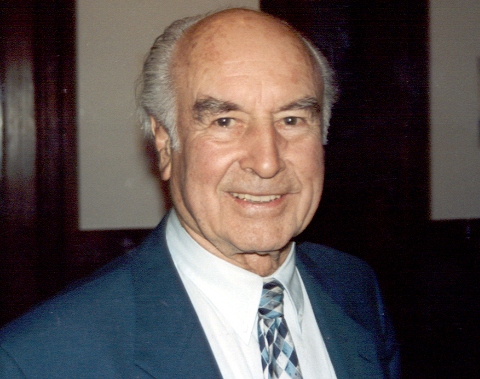
Albert Hoffman, Father of LSD Died at 102
Dr. Hofmann, date unknown, with a chemical model of LSD.
This is a composite of both articles from Wikipedia and NYTimes.
Albert Hofmann, the mystical Swiss chemist who gave the world LSD, the most powerful psychotropic substance known, died Tuesday at his hilltop home near Basel, Switzerland. He was 102.
The cause was a heart attack, said Rick Doblin, founder and president of the Multidisciplinary Association for Psychedelic Studies, a California-based group that in 2005 republished Dr. Hofmann’s 1979 book “LSD: My Problem Child.”
Hofmann joined the pharmaceutical-chemical department of Sandoz Laboratories (now Novartis), located in Basel as a co-worker with professor Arthur Stoll, founder and director of the pharmaceutical department. He began studying the medicinal plant squill and the fungus ergot as part of a program to purify and synthesize active constituents for use as pharmaceuticals where his main contribution was to elucidate the chemical structure of the common nucleus of Scilla glycosides(an active principal of Mediterranean Squill). While researching lysergic acid derivatives, Hofmann first synthesized LSD-25 in 1938, the main intention of the synthesis however was to obtain a respiratory and circulatory stimulant (an analeptic). It was set aside for five years, until April 16, 1943, when Hofmann decided to take another look at it. While re-synthesizing LSD, he accidentally absorbed a small quantity through his fingertips.
He then took LSD hundreds of times, but regarded it as a powerful and potentially dangerous psychotropic drug that demanded respect. More important to him than the pleasures of the psychedelic experience was the drug’s value as a revelatory aid for contemplating and understanding what he saw as humanity’s oneness with nature. That perception, of union, which came to Dr. Hofmann as almost a religious epiphany while still a child, directed much of his personal and professional life.
Dr. Hofmann was born in Baden, a spa town in northern Switzerland, on Jan. 11, 1906, the eldest of four children. His father, who had no higher education, was a toolmaker in a local factory, and the family lived in a rented apartment. But Dr. Hofmann spent much of his childhood outdoors.
He would wander the hills above the town and play around the ruins of a Hapsburg castle, the Stein. “It was a real paradise up there,” he said in an interview in 2006. “We had no money, but I had a wonderful childhood.”
It was during one of his ambles that he had his epiphany.
“It happened on a May morning — I have forgotten the year — but I can still point to the exact spot where it occurred, on a forest path on Martinsberg above Baden,” he wrote in “LSD: My Problem Child.” “As I strolled through the freshly greened woods filled with bird song and lit up by the morning sun, all at once everything appeared in an uncommonly clear light.
“It shone with the most beautiful radiance, speaking to the heart, as though it wanted to encompass me in its majesty. I was filled with an indescribable sensation of joy, oneness and blissful security.”
Though Dr. Hofmann’s father was a Roman Catholic and his mother a Protestant, Dr. Hofmann, from an early age, felt that organized religion missed the point. When he was 7 or 8, he recalled, he spoke to a friend about whether Jesus was divine. “I said that I didn’t believe, but that there must be a God because there is the world and someone made the world,” he said. “I had this very deep connection with nature.”
Dr. Hofmann went on to study chemistry at Zurich University because, he said, he wanted to explore the natural world at the level where energy and elements combine to create life. He earned his Ph.D. there in 1929, when he was just 23. He then took a job with Sandoz Laboratories in Basel, attracted by a program there that sought to synthesize pharmacological compounds from medicinally important plants.
It was during his work on the ergot fungus, which grows in rye kernels, that he stumbled on LSD, accidentally ingesting a trace of the compound one Friday afternoon in April 1943. Soon he experienced an altered state of consciousness similar to the one he had experienced as a child.
On the following Monday, he deliberately swallowed a dose of LSD and rode his bicycle home as the effects of the drug overwhelmed him. That day, April 19, later became memorialized by LSD enthusiasts as “bicycle day.”

Further research
| “ | I think that in human evolution it has never been as necessary to have this substance LSD. It is just a tool to turn us into what we are supposed to be. | ” |
| —Albert Hofmann, | ||
Hofmann became director of the natural products department at Sandoz and went on studying hallucinogenic substances found in Mexican mushrooms and other plants used by the aboriginal people. This led to the synthesis of psilocybin, the active agent of many "magic mushrooms." Hofmann also became interested in the seeds of the Mexican morning glory species Rivea corymbosa, the seeds of which are called Ololiuhqui by the natives. He was surprised to find the active compound of Ololiuhqui, ergine (lysergic acid amide), to be closely related to LSD.
In 1962, he and his wife Anita traveled to southern Mexico to search for the plant "Ska Maria Pastora" (Leaves of Mary the Shepherdess), later known as Salvia divinorum. He was able to obtain samples of this plant but never succeeded in identifying its active compound which has since been identified as the diterpenoid Salvinorin A.

In 1963, Hofmann attended the annual convention of the World Academy of Arts and Sciences (WAAS) in Stockholm.
Hofmann called LSD "medicine for the soul" and was frustrated by the worldwide prohibition that has pushed it underground. "It was used very successfully for 10 years in psychoanalysis," he said, adding that the drug was hijacked by the youth movement of the 1960s and then unfairly demonized by the establishment that the movement opposed. He conceded that LSD can be dangerous in the wrong hands.
His Work Continues
In December 2007, Swiss medical authorities permitted a psychotherapist to perform psychotherapeutical experiments with patients who suffer from terminal stage cancer and other deadly diseases. Although not yet started, these experiments will represent the first study of the therapeutic effects of LSD on humans in 35 years, as other studies have focused on the drug's effects on consciousness and body. Hofmann supported the study, and continued to believe in the therapeutic benefits of LSD.
Hofmann was due to speak at the World Psychedelic Forum from March 21 to March 24, 2008 but was forced to pull out due to poor health.
Dr. Hofmann’s work produced other important drugs, including methergine, used to treat postpartum hemorrhaging, the leading cause of death from childbirth. But it was LSD that shaped both his career and his spiritual quest.“Through my LSD experience and my new picture of reality, I became aware of the wonder of creation, the magnificence of nature and of the animal and plant kingdom,” Dr. Hofmann told the psychiatrist Stanislav Grof during an interview in 1984. “I became very sensitive to what will happen to all this and all of us.”
Dr. Hofmann became an impassioned advocate for the environment and argued that LSD, besides being a valuable tool for psychiatry, could be used to awaken a deeper awareness of mankind’s place in nature and help curb society’s ultimately self-destructive degradation of the natural world.
But he was also disturbed by the cavalier use of LSD as a drug for entertainment, arguing that it should be treated in the way that primitive societies treat psychoactive sacred plants, which are ingested with care and spiritual intent.
After his discovery of LSD’s properties, Dr. Hofmann spent years researching sacred plants. With his friend R. Gordon Wasson, he participated in psychedelic rituals with Mazatec shamans in southern Mexico. He succeeded in synthesizing the active compounds in the Psilocybe mexicana mushroom, which he named psilocybin and psilocin. He also isolated the active compound in morning glory seeds, which the Mazatec also used as an intoxicant, and found that its chemical structure was close to that of LSD.
During the psychedelic era, Dr. Hofmann struck up friendships with such outsize personalities as Timothy Leary, Allen Ginsberg and Aldous Huxley, who, nearing death in 1963, asked his wife for an injection of LSD to help him through the final painful throes of throat cancer.
Yet despite his involvement with psychoactive compounds, Dr. Hofmann remained moored in his Swiss chemist identity. He stayed with Sandoz as head of the research department for natural medicines until his retirement in 1971. He wrote more than 100 scientific articles and was the author or co-author of a number of books
He and his wife, Anita, who died recently, reared four children in Basel. A son died of alcoholism at 53. Survivors include several grandchildren and great-grandchildren.
Though Dr. Hofmann called LSD “medicine for the soul,” by 2006 his hallucinogenic days were long behind him, he said in the interview that year.
“I know LSD; I don’t need to take it anymore,” he said, adding. “Maybe when I die, like Aldous Huxley.”
But he said LSD had not affected his understanding of death. In death, he said, “I go back to where I came from, to where I was before I was born, that’s all.”
Friday, May 16, 2008
"Court Approves Evil Gay Agenda"
Satan's plan to make uptight straight people "really uncomfortable" working out "fabulously," say Bay Area gays
Friday, May 16, 2008
We are all going to die. Very, very soon. Did you know?
Apparently, the signs are all in place and the plague is clearly nigh and Armageddon is fast upon us because, oh my angry heterosexual god, the announcement has now been handed down: Couples who deeply love one another may now get married in California. It's true.
Wait, there's more. The couple in question might both have penises. Or they both might not. This is the crazy, terrifying new thing: It is totally up to them. Can you imagine?
Put another way: If you are a loving couple in this fine and baffled state, your particular combination of genitalia has officially been deemed irrelevant as far as whether or not you may hold a lovely little ceremony and enjoy a year or three of wedded bliss and buy a tiny condo you can't really afford, and then fight about money and who gets to name the dog as you lose that once-omnipotent romantic spark and rarely have sex anymore and eat your meals in silence as half of you get divorced in about 5.3 years and end up back on the dating scene, wondering whatever happened to your dreams. You know, just like everyone else!
Isn't that wonderful? Isn't that absolutely terrifying? Isn't that both? You're damn right it is.
Here's the problem: despite the tears of joy flooding through the gay community and despite the soothing gobs of liberal bliss pouring like warm honey over tens of thousands -- nay, millions -- of progressive humans worldwide, all of whom are cheering this landmark groundbreaking rainbow-colored California Supreme Court decision, seeing it as one of the most positive, hopeful shifts to occur in decades, the armies of right-wing darkness are screaming their dread, scraping their nails on the chalkboard of fear, rallying the bitterly faithful.
Oh yes they are. This is the bad news. As you read these very words, shrill cultural conservatives from Orange County to Fresno to Stockton are holding meetings in all sorts of grungy subbasements and moldy rec rooms and sterile Holiday Inn conference rooms, sipping watery Sanka and sweating profusely in their armpits and scowling like angry cats as they work to put a quick and painful stop to all this gay-loving God-hating nonsense, by way of an initiative on the November ballot outlawing icky and confusing gay marriage, by constitutional decree, once and for all.
See? Same as it ever was: One beautiful step forward, one giant jackboot back.
Or is it? This is the big question now facing the intelligent and sex-positive world: Can they succeed? Will the forces of religious righteousness and repressed sexuality and violent Biblical misunderstanding be able to pull one last Rove-like maneuver out of the hat of conservative hate? Put more simply: Are the farm-belt minions still sufficiently scared of happy gay people in love?
It might not be such an easy trick this time. This is the good news. It is the twilight of the Bush Endtimes and the right wing hate machine is no longer the nasty Hummer of bloviated pain it once was. What's more, there's this pesky thing known as a $3 trillion war. There is brutal economic recession. There is environmental collapse. Really, who cares about happy gay people getting married when it costs 4 bucks a gallon to get to Wal-Mart? Priorities, people.
What's more, it was one thing for an uppity and slick San Francisco mayor to try and make a name for himself and enter the gay history books by allowing all those happy gay people to stand in the rain back in 2004 and get married in City Hall, only to have it all annuled by the courts.
But it is quite another when a powerhouse seven-member Supreme Court -- six of whom are moderate Repubicans -- of the largest and most potent state in the union says, hey, you know what? It appears we've had it wrong all along. It appears there is actually nothing the slightest bit wrong or unlawful or even dangerous about allowing people of the same gender to buy overpriced formalwear and drink way too much champagne and dance to crappy '80s power ballads in the Chardonnay Room of a low-rent winery up in Napa, and call it a wedding.
Who can argue with that? Hell, to this very day, cultural conservatives still have no idea exactly why they hate gay marriage. There is still zero articulation. There is a complete lack of fact or understanding and I have yet to meet a single person of any political stripe who can adequately explain exactly why gay marriage is so dangerous, or who's threatened, or how. Same as it ever was? Yes. Only now, their misunderstanding feels quite a bit less dangerous, and far more pathetic.
Meanwhile, the chocolate, whipped cream, ice sculpture, engraved invitation, lace, taffeta, silk, wedding chapel, tux rental, Elvis impersonator, wedding cake, folding lawn chair, large party tent, catering, floral arrangement, prenuptial attorney, divorce attorney, surrogate parent, and cutesy wedding shower gift bag industries are all simultaneously rejoicing at the prospect.
Think of it. Thousands of new weddings, a million new rehearsal dinner reservations, countless fresh registrations at regional Pottery Barns and Crate and Barrels, endless DJs replaying old Elton John and Celine Dion and Shrek soundtrack tunes. The sagging and desperate California economy is positively grinning at the idea, a grin which is right now going beautifully with the thousands of people already signing up for their ceremonies at city halls across the state.
Which means the only ones left still scowling, still bitter and miserable and unhappy about it all, are the ones who never understood much about love and progress in the first place. What a shame. They're gonna miss one hell of a reception.

Tuesday, May 13, 2008
Finding Meaning In My Shield
Jack Handey's Humorous Takes on Flag Symbols
Reading thru the meaning of flag symbols, I really wondered if the meaning of BATS was historically "Eternal Life". I mean, mine has 3 BLACK BATS, 2 above, one below, A BIG BLACK STRIPE on my Baucom's coat of arms/family shield.....
Black (Sable) = Constancy or grief
Bat = Awareness of the powers of darkness and chaos
However, upon further internetting, I found a site that says we're Scottish (as I always suspected) but the shield is different with a blue shield with three red roses on a silver bend.

 Scarf or shield suspender of a knight commander; signifies defense or protection
Blue (Azure) = Truth and loyalty
Silver or White (Argent) = Peace and sincerity
Dove = Loving constancy and peace; the Holy Spirit; with an olive branch in its bill, it signifies a harbinger of good tidings
 Mark of the seventh son; Hope and joy;
Rose, Red = Grace and beauty
Origin Displayed: Scottish
First found in Fifeshire, in Scotland, where they held a family seat from ancient times, long before the Norman Conquest in 1066.
Scots left their country by the thousands to travel to Australia and North America. Desperate for freedom and an opportunity to fend for themselves, many paid huge fees and suffered under terrible conditions on long voyages. Still, for those who made the trip, freedom and opportunity awaited. In North America, many fought their old English oppressors in the American War of Independence. In recent years, Scottish heritage has been an increasingly important topic, as clan societies and other organizations have renewed people's interest in their history. An examination of passenger and immigration lists shows many early settlers bearing the name of Baucom: Alexander Balcom, who came to Rhode Island in 1664 , Henry Balcom, who is on record in Charlestown, MA in 1664; Jonas Balcom, who arrived in Nova Scotia some time between 1735-1835.
And the Baucom motto:
Dum Spiro Spero
While I have breath I hope.
It's nice to see that the internet grows and adds information. I looked for these meanings about 2+ years ago and couldn't find a thing
Monday, May 12, 2008
Mom n' Pop Pumps Can't Register Over $3.99 for Gas

Old gas pumps can't handle ever-rising prices
By JOHN K. WILEY, AP
Mom-and-pop service stations are running into a problem as gasoline marches toward $4 a gallon: Thousands of old-fashioned pumps can't register more than $3.99 on their spinning mechanical dials.
The pumps, throwbacks to a bygone era on the American road, are difficult and expensive to upgrade, and replacing them is often out of the question for station owners who are still just scraping by.
Many of the same pumps can only count up to $99.99 for the total sale, preventing owners of some SUVs, vans, trucks and tractor-trailers to fill their tanks all the way.
As many as 8,500 of the nation's 170,000 service stations have old-style meters that need to be fixed — about 17,000 individual pumps, said Bob Renkes, executive vice president of the Petroleum Equipment Institute of Tulsa, Okla.
At Chip Colville's Chevron station in this eastern Washington town, where men in the family have pumped gas since 1919, three stubby, gray pumps were installed when gas was less than $1 a gallon. They top out at $3.999, only 30 cents above the price of regular gas at Colville's station.
"In small towns, where you don't have the volume, there's no way you can afford to pay for the replacements for these old pumps," Colville said. "It's just not economically feasible."
The problem is worse in extremely rural areas, where "this might be the only pump in town that people can access," said Mike Rud, director of the North Dakota Petroleum Marketers Association.
Demand for replacements has caused a months-long backlog for companies that make or rebuild the mechanical meters — and that's just for stations that can afford the upgrade.
For many station owners — who, because of relatively small profit margin on gas, aren't raking in money even though gas prices are marching higher — replacing the pumps altogether with electronic ones is just not an option.
"The new ones run between $10,000 and $15,000 apiece," Colville said. "It's an expense that's not worth it."
Mechanical meters can be retrofitted with higher numbers when pump prices climb another dollar. The last time that happened was in late 2005, when gas went over $3 a gallon, and owners of the older pumps installed kits that went to $3.999.
This time around, owners of the old pumps will need to install another kit that can handle prices up to $4.999, and possibly higher. Industry experts say those changes could cost as much as $650 per pump.
It costs less to change the meter to raise the maximum price from $2.99 to $3.99 a gallon, but that option raises the risk of a breakdown, said said Pete Turner, chief operating officer for APS Petroleum Equipment Inc. of Anniston, Ala.
"The computer that they're upgrading was not designed to go any more than what it's going now, and if you do it, they don't last long enough," Turner said. "They run so fast that the gears are wearing out."
The price of fixing the meters jumped in the past three years because old pumps are being phased out for new electronic pumps and demand for refurbished meters is down, Al Eichorn, vice president of PMP Corp., which makes the mechanical meters.
The Avon, Conn., company has hired extra employees who are working overtime but still has a 14-week backlog of orders, Eichorn said.
To deal with the problem, some state regulators are allowing half-pricing — displaying the price for a half-gallon of gas, then doubling the price shown on the meter.
In North Dakota, regulators recently told service stations their mechanical pumps could use half-pricing, provided they use signs to alert costumers and find a permanent solution by April 2009.
South Dakota is preparing similar rules, officials say. And in Minnesota, rural service station owners whose pumps cannot display the right price are being told to cover up the incorrect numbers.
"The consumer can only see the gallons turning," said Bill Walsh, a spokesman for the Minnesota Department of Commerce. "Then they just have to settle up with a calculator, basically." Colville and about a dozen other service station owners in Washington have received temporary variances from the state to allow them to half-price fuel.
Stations granted variances are required to post signs telling customers that the final price they will pay is twice what the pump meter indicates.
"No, that don't bother me. The price does," said Jim Puls, a third-generation rancher who pulled up to Colville's diesel pump to fill up his flatbed truck at $4.41 a gallon. "I can understand what they have to do."
Nationally, the average price for a gallon of gasoline rose past $3.70 Sunday, while diesel was selling for an average of $4.33 a gallon, according to AAA and the Oil Price Information Service.
Small stations are struggling to make a profit on gas, even as the price rises. Its small profit margin makes it less lucrative that snacks and other products the stores sell inside.
"If gas is the profit driver and you are one of those guys with the old pumps, you're either evolving or getting out," said Jeff Lenard, spokesman for the National Association of Convenience Stores, a trade group that represents about 115,000 stores that sell gasoline.
"If you're just that kind of image of the '50s gas station where you have a conversation, fill up and have a cup of coffee, that's in the movies."
Friday, May 9, 2008
Environmentalists Grill Duke Energy CEO

"...At least a dozen speakers challenged him on global warming, air pollution and other environmental issues. Rogers responded to each question, though not always to the satisfaction of the environmental community.
He also responded to other shareholders who said Duke should not worry about environmental issues. "I'd just caution our company not to get caught up in all this global-warming business," said one.
The Carolinas Clean Air Coalition and other environmental groups protested outside the meeting at Duke's Energy Center in uptown Charlotte. They oppose the 800-megwatt coal unit under construction at Duke's Cliffside Steam Station in North Carolina as well as the 630-megawatt coal-gassification plant the company is building in Indiana and its proposed Lee Nuclear Station near Gaffney, S.C.Rogers clearly knew the issues were coming. Instead of giving his normal recap of how Duke had performed in the past year, his speech to the shareholders was about Duke's plans for future power generation. He again promised Duke will take most of the carbon out of its energy production by 2050.
Rogers defended the Cliffside project in Cleveland and Rutherford counties. He called the new unit a bridge plant to get Duke Power to the point where it can radically reduce its carbon footprint in the future. He cited the work on trapping carbon dioxide that will be accomplished at the new gassification plant. And he insisted that nuclear energy will be needed to provide energy without carbon.
Wednesday, May 7, 2008
Green Porno


Monday, May 5, 2008
The Rape of Europa
I have been eager to see The Rape of Europa (now showing at The Colony) since I saw a piece done on CBS Sunday Morning. I have often thought about the reasons people, who can have ANYTHING, buy (or in this case, steal and kill for) ART. And how a representation of a person, it being a painting or sculpture, can be more highly valued than a living being.

Somalis Protest Over New Monetary Changes and Food Crisis


AP and Reuters articles tells how people are now dying not from starvation, but from the current food crisis and high food prices:
MOGADISHU, Somalia - Troops opened fire and killed at least two people as tens of thousands of people rioted over high food prices in Somalia's capital Monday.
Several people also were injured in the protest in Mogadishu in this Horn of Africa nation.
Prices of rice and other food staples have been rising rapidly around the world, boosted by poor weather in some nations and rising demand. In Africa, prices of some staple foods have increased more than 50 percent in a matter of weeks.
The Somali protesters include women and children, who marched to protest the refusal of traders to accept old 1,000-shilling notes, blaming that for the skyrocketing food prices.
Soon after, tens of thousands of people took to the streets, hurling stones that smashed the windshields of several cars and buses. Rocks also were thrown at shops and chaos erupted at the capital's main Bakara market.
Hundreds of shops and restaurants in southern Mogadishu closed their doors for fear of looting.
Dr. Dahir Dhere said a man wounded in the protests died on the way to an operating room at the capital's main Medina Hospital.
Protester Abdinur Farah says he was marching with his uncle in southern Mogadishu when government troops opened fire and wounded his relative. He said his uncle died before they could take him to the hospital.
In Mogadishu, the price of 2.2 pounds of corn meal has gone from 12 cents in January to 25 cents. Another staple, rice, has gone up in that time from $26 to $47.50 for a 110-pound sack.
Protests also have been held in three other African countries, including Senegal, whose president on Sunday called for the United Nations to dismantle its Food and Agriculture Organization, calling it an ineffective money-eater that failed to help avert the global food crisis.
Senegal's leader, President Abdoulaye Wade, said he had long called for the Rome-based organization to be transferred to Africa, "near the 'sick ones' it pretends to care for."
But, "This time, I'm going further: It must be eliminated," he said in a statement. Wade suggested its assets be transferred to the U.N. International Fund for Agricultural Development, which he said was more efficient, and that that agency set up headquarters in Africa "at the heart of the problem."
FAO officials could not immediately be reached for comment.
Wade's government responded to protest marches by securing a deal with India that ensures Senegal's needs of 600,000 tons of rice a year are met for the next six years. In Burkina Faso, the government eliminated duties and taxes on rice, salt, milk and all products used to prepare food for children.
---A young man was killed when thousands of Somalis protested in Mogadishu on Monday over food traders' refusal to take old currency notes blamed for stoking spiralling inflation, witnesses said. A shopkeeper shot the man dead after dozens of demonstrators wielding clubs and stones broke into his store. Locals said police wounded a teenage boy while trying to disperse hundreds of angry residents. "The shopkeeper fired a pistol at the crowd and it hit the young man's head," one witness in the Madina district in the southeast of the capital said, refusing to give his name.
Despite still being a legal currency, many shopkeepers have been refusing to accept the worn out old notes, saying wholesale traders were also refusing to take them. The Somali shilling is valued at roughly 34,000 to the dollar -- more than double what it is was a year ago -- and many blame the fall in value on counterfeiters. With an interim government focused on containing islamist insurgency, there is no one to control rampant counterfeiting of currency which is often exchanged for real dollars that are then taken out of the country. The problem has been compounded by sharply rising world food prices, leaving many in the lawless Horn of Africa nation of 10 million short of money to buy food, triggering several protests or riots in the past six months.
On Monday, thousands were on the streets of the bombed-out capital, clutching tattered old notes while shouting "Down with traders" and "We want to buy food". All shops remained closed and the streets empty as protestors stoned the few vehicles moving around.
"NOTHING TO EAT"
"The whole city is up in smoke," protestor Hussein Abdikadir told Reuters while rolling a tyre he said he intended to burn in the Buulahubey neighbourhood of southern Mogadishu. "Traders have refused to take old notes. Food prices are high and we have nothing to eat," he said. "We will protest until the traders agree to take the notes and sell us food."
Traders in the sprawling Bakara Market, which also houses a notorious open-air arms bazaar, blame the interim government and unscrupulous businessmen for the runaway inflation. "Businessmen blame the government, which does not control the security and circulation of money. The problem is from Bakara market but I don't know who is behind it and how," moneychanger Abdirahman Omar told Reuters.
Somalia has been without any kind of real government since the 1991 ouster of dictator Mohamed Siad Barre by a coalition of warlords. Since then, the country's agricultural bounty has withered to the point where Somalis rely on imports. "The refusal of the old bank notes is an economic war which will automatically lead to violence and starvation," Osman Buno, another shopkeeper, told Reuters. The exchange rate is so bad Somalis must carry huge stacks of 1,000 Somali shilling notes just to buy daily necessities.
Thursday, May 1, 2008
Odin's Wild Ride

Well, tonight, while I was watching him ride in circles and Scott worked on his car, O stopped and straightaway asked to get his training wheels off. I stuttered but agreed. I knew Scott had the right tools so I told O to politely ask for help. As soon as the trainers were off, it was amazing! He rode around and around w/out any help or falling. We all said "It's a miracle!" Then O said "It's a miracle to you but it's not a miracle to me." ha - it's great when he has such confidence in his abilities. I told him how proud I was and I was shocked that I didn't even get that parental right-of-passage - having to run behind him holding the fender, catching him as he falls or teach him like I taught all my nephews - by pushing them down a steep hill. BTW, I hope they've forgiven me...
Nuris Marcum Nance Would Be 102 Today
My son asked me today what was the date. When I realized what it was, I told him if my grandfather, Nuris Marcum "Papa" Nance, Sr. was alive, he would be 102 on this day. I wish I could find a photo of him - he seemed tall, tanned easily, both forearm "sleeves" were tattooed with various memories - from his Navy experience on the USS Oklahoma, a hula girl from Hawaii, a knife that appeared to 'slice' through his arm, and a baby cartoon representing my mother, his first child. He had a grand nose he called Roman "because it's roman all over my face", but was reminiscent of his American Indian roots. And he was tough, tattoos barely hid the slice removed near the bend in his arm where a horse tried to stomp him to death after he tried to break the beast. He had already ridden the horse successfully before and yelled for his dad not to hurt the animal, but it was too late after his dad grabbed the pitchfork. He met my grandmother through her brother who was a fellow 'hobo' that jumped trains with him before he joined the Navy. He was not only in the Navy, but was drafted into the Army at 36 for WWII toward the end of the war. Luckily, he never left training camp in Texas, from where he'd send home the rattlesnake tails from his meals. He eventually ran his own paint contracting business and was known so well for his ability to mix color from sight, he would have strangers come to the house after he retired, still asking for his expertise.
I wanted to find a picture of him (if I find one to scan, I'll add it later.) But while searching the Internet for a possible photo of him, I ran across my cousin, Marc Nance. He's The Third and there is even a Fifth! Apparently he's running for City Council in Maryland:

Marc Nance and his wife Beverly have been married for 32 years. They have lived in Mount Airy since early 1986. They have raised four children, all of whom attended local public schools.
Marc received his BS in Electrical Engineering from the University of Dayton in 1980. He works as a design engineer at Johns Hopkins University Applied Physics Laboratory.